Zhuangzi (莊子) - Zhenren (真人)
Zhenren (真人), the True Person of Daoism: who the Zhenren is, where the idea comes from, and simple ways to practise it.
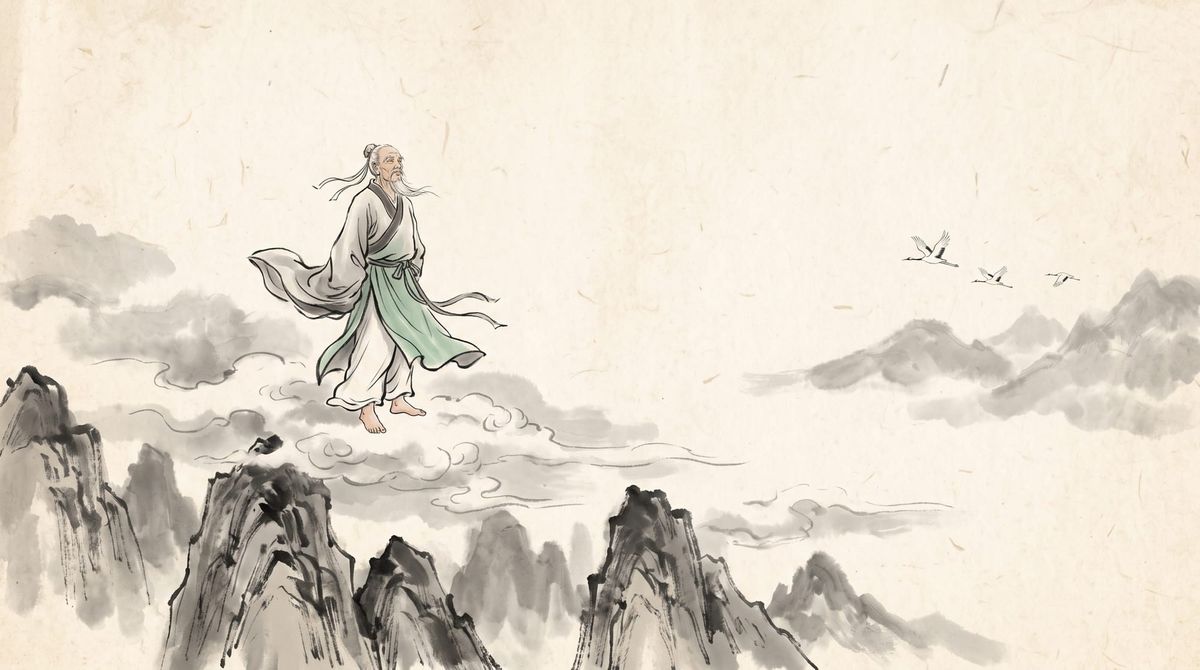
Zhenren (真人) in Daoism means "True Person" or "Perfected Person." It refers to someone who has fully aligned with the Dao, beyond ego, desire, and social conditioning. The Zhenren lives naturally, effortlessly, spontaneously, and without contrivance (Wu Wei 無為).
Key traits of a Zhenren
- Freedom from emotion and attachment: calm in gain or loss, praise or blame.
- Unity with nature: their actions follow natural rhythms, not artificial rules.
- Simplicity and humility: they are not caught up in fame, power, or status.
- Clarity and spontaneity: they act without second-guessing, from a clear mind.
- Immortality (symbolic or literal): some Daoist schools speak of Zhenren as immortals (xian 仙); others mean spiritual immortality, transcending the self.
Classic sources
- Zhuangzi (莊子): the Zhenren appears repeatedly, especially in Chapters 6 and 7. He describes them as breathing through their heels, riding the winds, and being unaffected by life or death.
- Dao De Jing (道德經): while it doesn't use the term "Zhenren" directly, its ideal of the sage overlaps.
"The True Person of ancient times did not rebel against poverty, was not proud in plenty, and did not plan his affairs." — Zhuangzi
Practical suggestions drawn from Zhenren teachings
- Daily quiet time (even 5 minutes). Sit without goals or thoughts. Just be. Let things settle.
- Let go of fixed identity. Catch yourself when you say "I must be this kind of person." Instead, act from the situation.
- Respond, don't react. When criticized or praised, pause. Don't identify with it.
- Move with ease. In speech and action, ask: "Am I forcing this?" If yes, stop.
- Simplify choices. When unsure, choose the simpler path that requires less resistance or self-justification.
- Spend time in nature. Not to think, but to un-think. Let nature recalibrate your nervous system.
Further reading
- Zhuangzi: The Essential Writings, translated by Brook Ziporyn. Modern, clear English with an excellent introduction and footnotes. It shows how to let go of rigid views and practise spontaneity (Wu Wei), with real-life analogies (the butcher, the swimmer, the carpenter).
- The Way and Its Power (Dao De Jing), translated by Arthur Waley. Balanced between poetry and clarity, easy to read, with good notes. It teaches how to live simply, without striving.
- The Inner Chapters (Zhuangzi), translated by A.C. Graham. Philosophically precise, focused only on Zhuangzi's original core chapters, the richest source on the Zhenren, with strong commentary.